Main outtakes
- 01The first ten minutes set the room for the rest of the night.
- 02Fewer instructions, more presence.
- 03Atmosphere is the medium, not the decoration.
Hosting strangers is, on paper, an absurd thing to design. You cannot script the chemistry between people who have never met. You cannot guarantee that the table will land somewhere honest by the second hour. What you can do — what we have learned, over six hundred guests across two cities — is build the conditions under which it tends to happen.
The first ten minutes
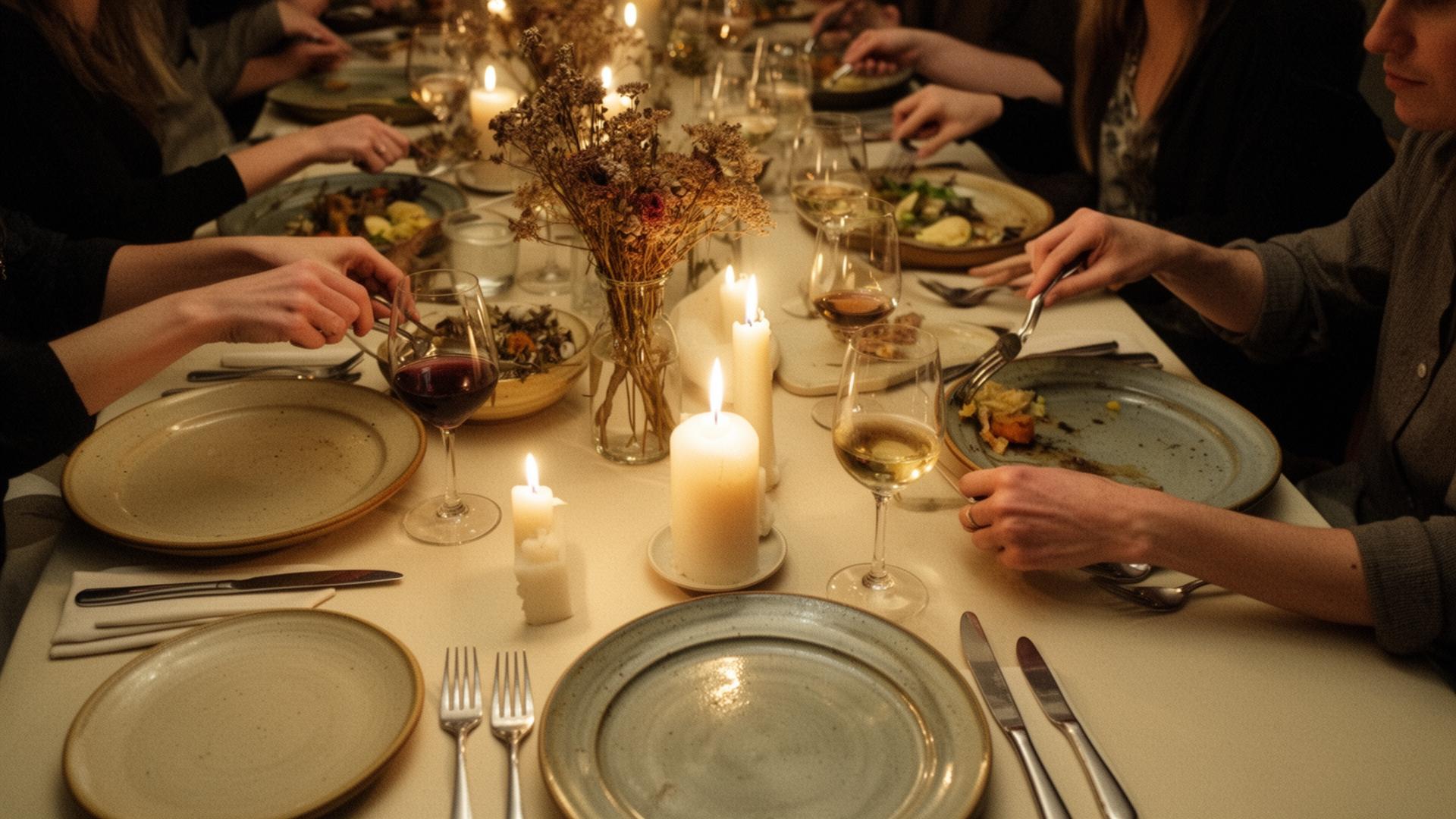
The first ten minutes of a dinner do most of the work. Light too bright, music too loud, host too anxious, and the room will perform itself for the rest of the night. Light slightly too low, music slightly too slow, host visibly at ease — and people quietly decide it is safe here to be a little more themselves.
The room teaches the people inside it how to be.
What we stopped doing
We stopped doing place cards. We stopped doing icebreakers. We stopped explaining the menu. The fewer instructions a room gives a guest, the more present they are forced to be. This is the same principle that governs good editorial — say less, trust the reader, leave room.
The second course
Something happens around the second course. The performance falls away. People stop monitoring how they sound. The conversations get longer, quieter, more specific. This is the moment HÄPI exists for. Everything before it is just careful preparation. Everything after it is just protecting the spell.
It is the same logic we now use for brand work, films and salons. Atmosphere is not decoration. Atmosphere is the medium.
Good ideas from Tallinn / Saigon
- ·Lower the music ten percent below comfortable.
- ·Skip place cards, let people choose where they sit.
- ·Never explain the menu. Let the food introduce itself.