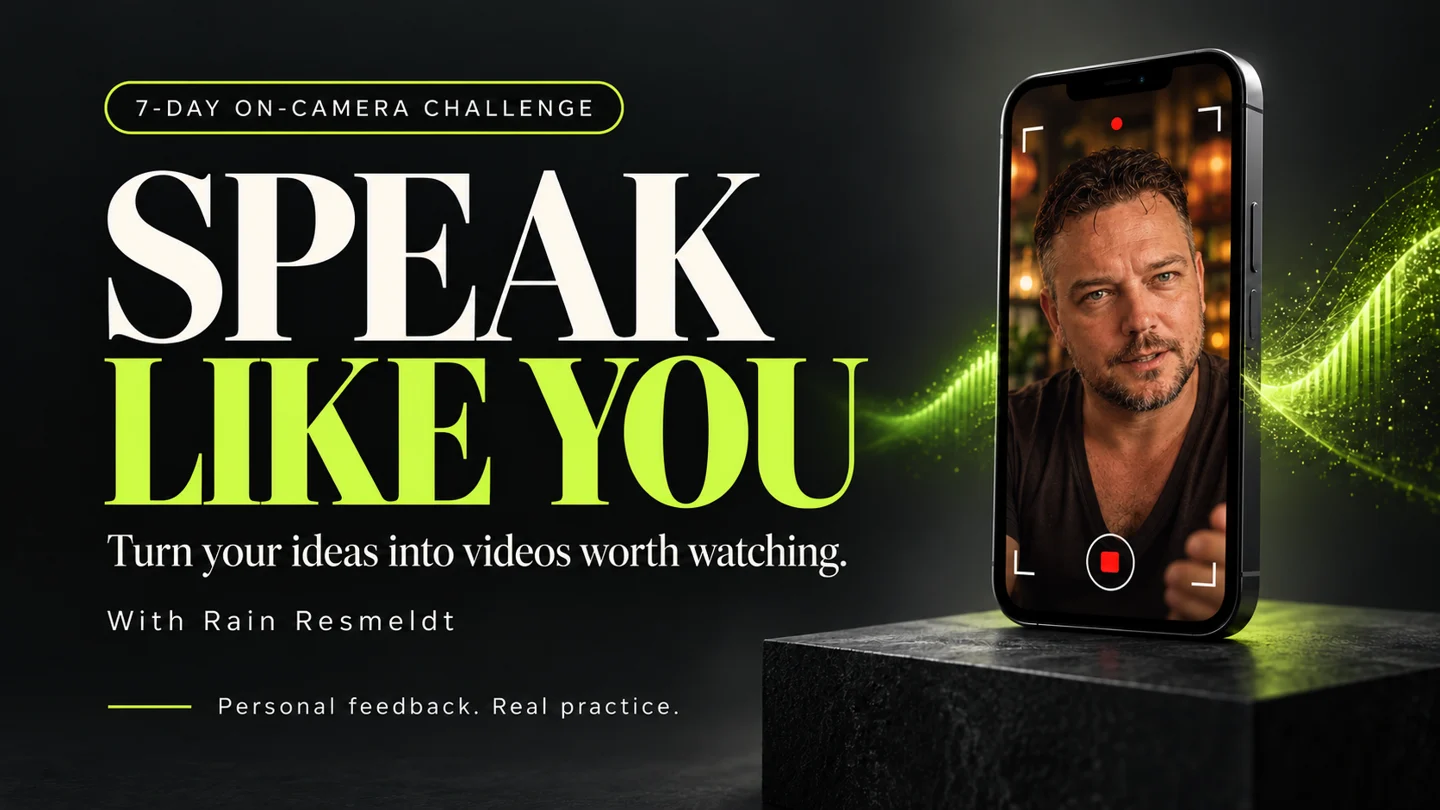
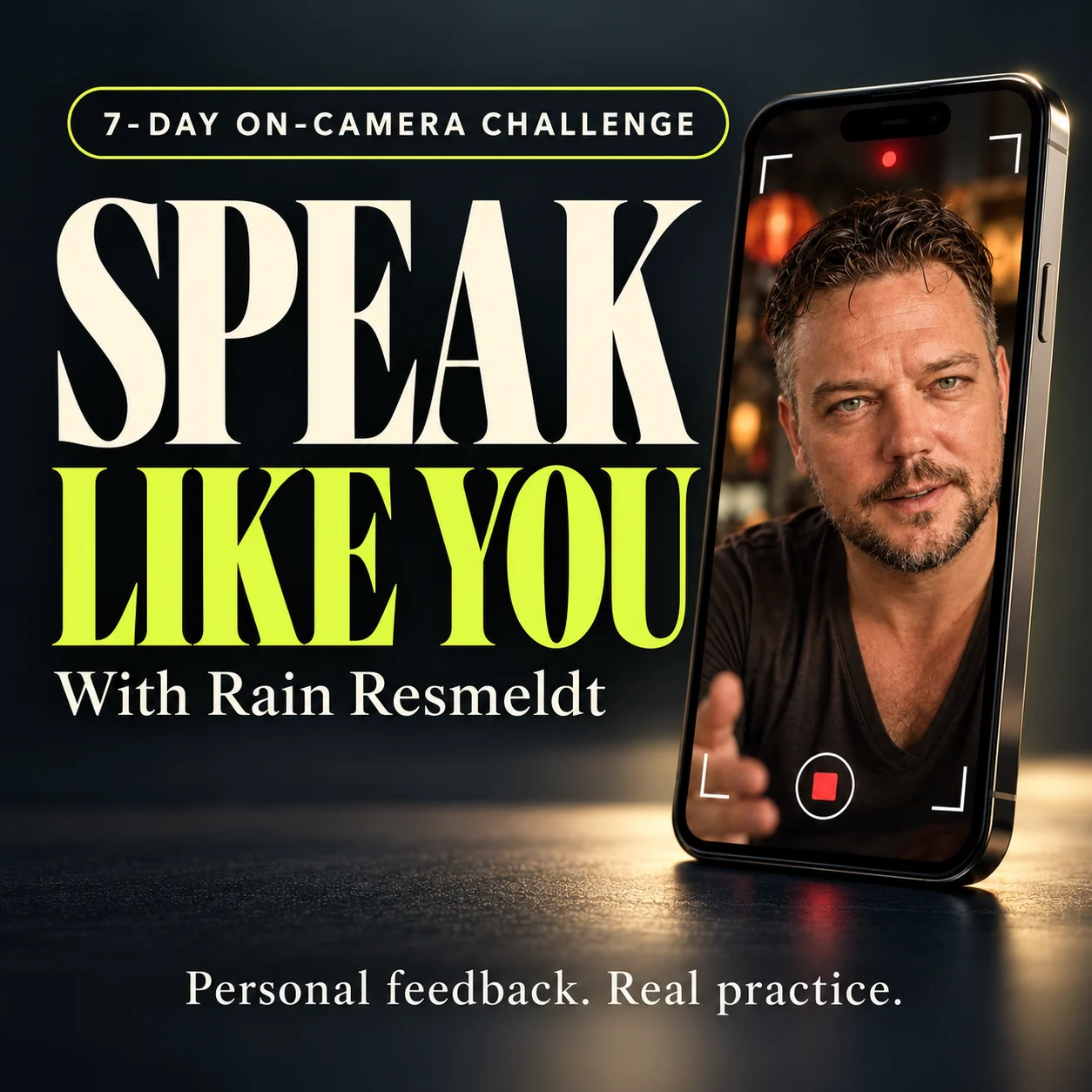
7-day on-camera challenge · With Rain Resmeldt
SPEAKLIKE YOU
Turn what you know into videos worth watching.
You know your work. But the camera makes you freeze, ramble or sound like someone else. Build a simpler way to speak — one short video at a time.
20–30 minutes a day. Your phone is enough to start.
Enrolment open · Early bird available now · First session starts 1 November
7practice videos
2personal reviews
1repeatable process
Priority list closes 31 October · First session 1 November
Free priority list · No commitment
Watch first · with Rain Resmeldt
Before you decide,
watch this first.
Rain Resmeldt introduces Speak Like You and how registration works.
You already have something to say
You can explain it in conversation.
Let’s bring that to camera.
For freelancers, business owners and professionals with experience worth sharing — not a new personality to invent.
You press record. Your mind goes blank.
Begin with a question you can answer, instead of a speech you have to remember.
One point becomes five minutes.
Give the idea three anchors, so you know where to start and stop.
The script doesn’t sound like you.
Speak first. Shape your own words afterwards.
Explain your work clearly
Give people one useful idea and an example they can follow.
Spend less time starting
Build a setup and a small process you can return to.
Make good ideas last
Use a spoken idea as the starting point for more useful content.

Rain Resmeldt’s Invisible Interview
Don’t give a speech.
Answer a good question.
Imagine one person asking you a real question. Answer them aloud, as you would in a conversation.
“What is one thing your clients often misunderstand about your work?”
One answer. One example. Your words.
The daily path
Seven days.
Something real, every day.
A short lesson, one practical exercise and a video or note to keep. Not seven days of watching someone else talk.
Day 01Start before you feel ready
Choose one person and one useful idea. Speak to them, not an invisible crowd.
Record a 45–60-second answer to “What is one thing you wish more people understood about what you do?” Keep this starting video.
Your day-one video and a short starting-point note.
Day 02Make your phone work for you
Choose the front camera to see your framing, or the back camera for image quality. Hold your phone with two hands or support it on books without a tripod. Check light and sound.
For example, face a window, rest your phone on books at eye level and record ten seconds to check the sound. Compare both cameras, record your answer and submit your first personal review.
A repeatable setup and your first keep / change / try review.
Day 03Answer, don’t perform
Use Rain Resmeldt’s Invisible Interview to move from presenting to answering a real question.
Say the answer aloud, then record it. Give nerves a job: focus on helping one person.
One recorded conversational answer.
Day 04Three anchors. Not a script
Give your idea a beginning, a useful example and a clear finish.
Write three anchor words. Record without reading full sentences.
A three-anchor outline and a focused video.
Day 05Keep your own voice
Start with your spoken words. Optional AI or a teleprompter can organise them, not replace you.
Refine one take, compare it with your spoken version and submit your second review.
A voice-first outline and your second personal review.
Day 06Take your idea into real life
Pick a setting that helps the idea. Keep privacy and clear sound in mind.
Film at home or in a suitable real-world setting. Make a useful example visible.
A video with real-world context, ready to keep private or share.
Day 07See what changed. Keep going
Repeat exactly the day-one question: “What is one thing you wish more people understood about what you do?” Compare clarity, number of takes and comfort with your starting video.
Record your answer, then create a two-week plan with six topics as your goal. Optionally outline an article or audio piece from one answer.
Your day-seven video, comparison notes and a two-week content plan aiming for six topics, with an optional article/audio outline.
Aim for three videos ready to share. Public posting is your choice. Live sessions are additional to the daily 20–30 minutes.
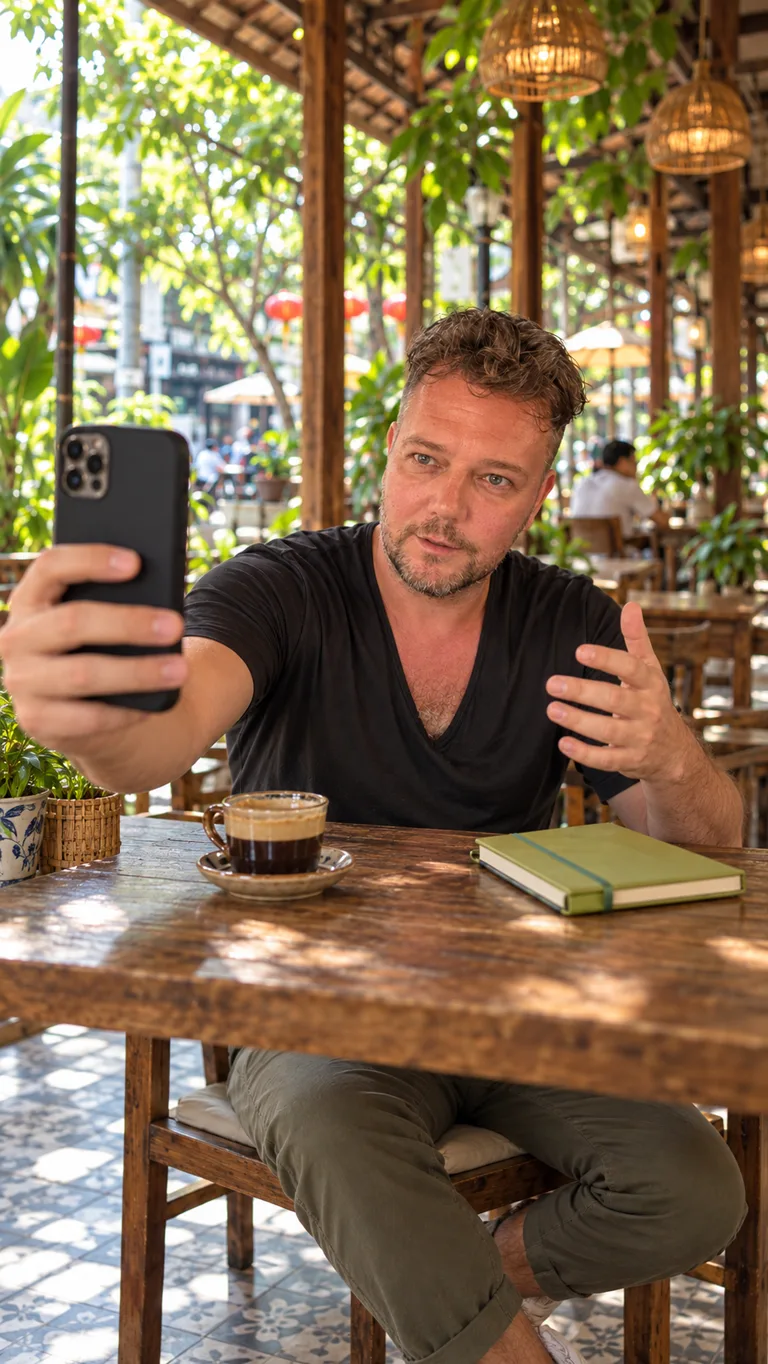
A person behind the process
Meet Rain Resmeldt.
Let’s turn your ideas into videos.
My work brings together journalism, marketing, interviews, podcasting and practical AI.
Today I bring that editorial experience together with practical AI. In this challenge, the tools support your thinking. They don’t speak in your place.
I help people and businesses find a clear direction, bring the right people together and turn good ideas into reality.
Clarity
I help you understand what matters and what to do next.
Connection
I bring people, knowledge and opportunities together.
Execution
I help turn ideas into something that works, together.
You won’t just get “looks good.” Your two personal reviews follow a simple method:
Keep
What already works in your video.
Change
One clear adjustment to make.
Try
A practical experiment for your next take.
A shared start
On 1 November, three live kickoff sessions run so participants in different time zones can each attend one. Exact times are announced based on registrants’ locations.
Two personal reviews
Specific feedback on two submitted practice videos, after days two and five.
A daily thread
A shared place for daily practice questions and learning alongside the cohort.
A closing clinic
A live session to review the process and choose what to practise next.
Make it part of your real world
No studio.
No new persona.
Start at home. Later, choose a setting that supports your idea. Protect other people’s privacy and listen back for clear sound.
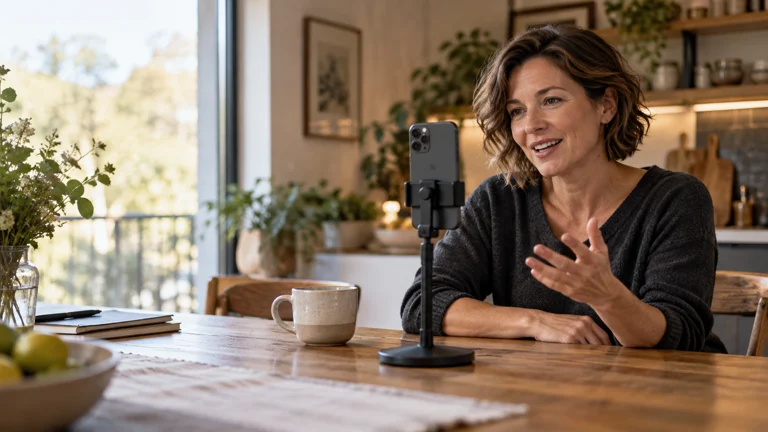
At home
A window, a quiet room, one useful idea.

At the cafe
A familiar corner suits a relaxed talk. Listen for chatter before you press record.

In the park
Find shelter from wind. Check the sound first.

By the sea
A real setting can add context. Clear sound comes first.

In the city
Choose a calm corner. Keep other people out of frame.
Bonus · Content-repurposing workshop
One useful video.
A longer life.
Your spoken idea can be the start, not the end. Turn it into an article or audio piece, then find the next questions worth answering.
Use AI to ask for missing examples and information, keep your voice, and create a useful, search-friendly structure. Longer content is follow-up work beyond the daily practice.
A kit you can keep using
Less guessing.
More getting started.
Your three anchors
01 · The idea I want to explain
02 · A real example
03 · What to remember
Before you press record
Quiet sound. Light on your face.
Camera at eye level.
One person. One useful idea.
Keep it in my voice
“Ask me for the missing example first.”
“Use my spoken words as your starting point.”
“Flag anything that doesn’t sound like me.”
- 20 comfortable places to record
- 20 opening lines when your mind goes blank
- When I freeze card
- Front vs back camera guide
- Invisible Interview questions
- Three-anchor card
- Natural prompter checklist
- AI voice brief and prompts
- Seven-day practice tracker
- Two-week content plan
Ten highlights from the full kit of 13 worksheets, 6 cheat sheets and 10 prompts. A few pages from the practice kit you’ll use throughout the challenge.

Progress you can actually look at
Compare your takes.
Not yourself to someone else.
Day 1 · Your starting point
Answer “What is one thing you wish more people understood about what you do?” Keep the video and note clarity, number of takes and comfort.
Day 7 · Your next step
Answer the exact same question again. Compare clarity, number of takes and comfort. Plan six topics over two weeks; optionally outline an article or audio piece.
Keep your comparison notes alongside your two-week plan, so you can choose what to practise next.

Priority list closes 31 October · First session 1 November
Bring your expertise.
Find your way to say it like
AUTHENTIC YOU!
- Seven short daily lessons and practice exercises
- Two personal video reviews from Rain Resmeldt
- Live kickoff and closing clinic
- Daily shared question thread
- 13 worksheets, 6 cheat sheets and 10 prompts
- Bonus content-repurposing workshop
What the 7-day mentored program costs
Early bird — US$29
US$29
Get the starter pack now and a place in the first seven-day mentored cohort. One payment covers both, including the two personal video reviews described in the programme.
Get early bird access — US$29First 20 people
US$59
Founding price for the first 20 people.
Standard
US$79
Full price for the 7-day mentored program.
Get programme updates before deciding. Joining the list does not reserve a paid place. Join the free priority list
First live kickoff: 1 November 2026. Session times will be confirmed for participants’ time zones.
A few things you might be wondering
Before you join.
What if I’m not confident on camera?
You can start with a private first take. The challenge gives you a small daily task and specific feedback, not a demand to perform perfectly. You can pause, try again and keep the video private.
Is this a daily talking-to-camera challenge?
Yes. For seven days you record one short video a day on your phone, talking straight to camera about what you know. Unlike a solo challenge, you get a lesson each day, two personal reviews from Rain Resmeldt and a group to practise with.
Do I need special equipment?
Your phone is enough to start. A quiet place and natural light help. A tripod or microphone is optional; we begin with what you already have.
Do I have to post my videos publicly?
No. Aim for three videos you would feel ready to share, but public posting is always your choice. Practice and reviews can stay within the agreed cohort space.
How much time will I need?
Plan for 20–30 minutes each day for the short lesson and exercise. The kickoff and closing clinic are additional live sessions. Kickoff happens on 1 November; exact times are announced based on registrants’ locations and sent to participants in time.
What do the two personal reviews cover?
Rain Resmeldt reviews two submitted practice videos: one after the setup day and one after the voice-first day. Each review identifies what to keep, one useful change and something to try next. This is feedback on communication and recording, not unlimited editing or production work.
Do I have to use AI or a teleprompter?
No. Both are optional. If you use them, you begin with your own spoken ideas and check that the final words still sound like you. Your phone and three anchor words can be enough.
What is the repurposing workshop?
The bonus shows how a short spoken idea can become an article or audio piece, then lead to more ideas. AI can ask for missing examples and organise useful, search-friendly writing without replacing your voice. Longer content takes follow-up work beyond the daily practice.
When does the first cohort start?
Enrolment is open now: you can get early bird access on Stan. The priority list closes on 31 October. The first session is the kickoff on 1 November — three live sessions that day, so participants in different time zones can each attend one; exact times are announced based on registrants’ locations. Daily lessons begin on 2 November. The priority list is free; joining does not take payment or reserve a paid place. The program costs US$79, with a US$59 founding price for the first 20 people and a US$29 early-bird option available today.
Will this bring me more clients or sales?
The goal is clearer videos and a repeatable process. Views, followers and sales depend on more than recording skills, so those aren’t promised.
What happens when I join the priority list?
Enrolment is open now: you can get early bird access on Stan. Join the free priority list to receive programme updates before deciding. It does not reserve a paid place. You can buy early bird access on Stan now. These updates are only about Speak Like You, not the general newsletter. You can ask for removal through the studio’s contact page.
How much does it cost?
The 7-day mentored program costs US$79. The first 20 people pay a founding price of US$59, and an early-bird option at US$29 is available today through the starter access link. Joining the priority list itself is free and carries no commitment.