Travel · Documentary
Slow Mornings in Places That Don't Perform
19 April 2026 · 9 min read · Three coastal towns, off-season
Main outtakes
- 01There are still places where the day is shaped by the sea, not by a calendar invite.
- 02The most healing places on earth are usually the ones least interested in being discovered.
- 03A town that does not perform itself is a rare and disappearing thing.
- 04Slowness is not laziness. It is a different relationship with time.
- 05You do not visit a place like this. You let it slow you down until you can hear yourself again.
There are towns that perform themselves, and there are towns that don't.
The ones that perform have learned, somewhere along the way, that being charming is a business model. They have been written about, geotagged, ranked, monetised. Their cafés have brand books. Their fishermen have Instagram accounts. Their authenticity is a deliverable.
This is not a story about those towns.
Off-season, on purpose
We went in the wrong month on purpose. November on a coast that is famous in July. The kind of timing that gets you confused looks from locals and empty tables everywhere.
The first thing you notice in a town off-season is the sound. Or rather, the absence of one specific sound — the low constant hum of being looked at. Without tourists, the town stops performing. It just exists.
The second thing you notice is how long the mornings are.
There are still places where the day is shaped by the sea, not by a calendar invite.
The first town: nothing happens here, beautifully
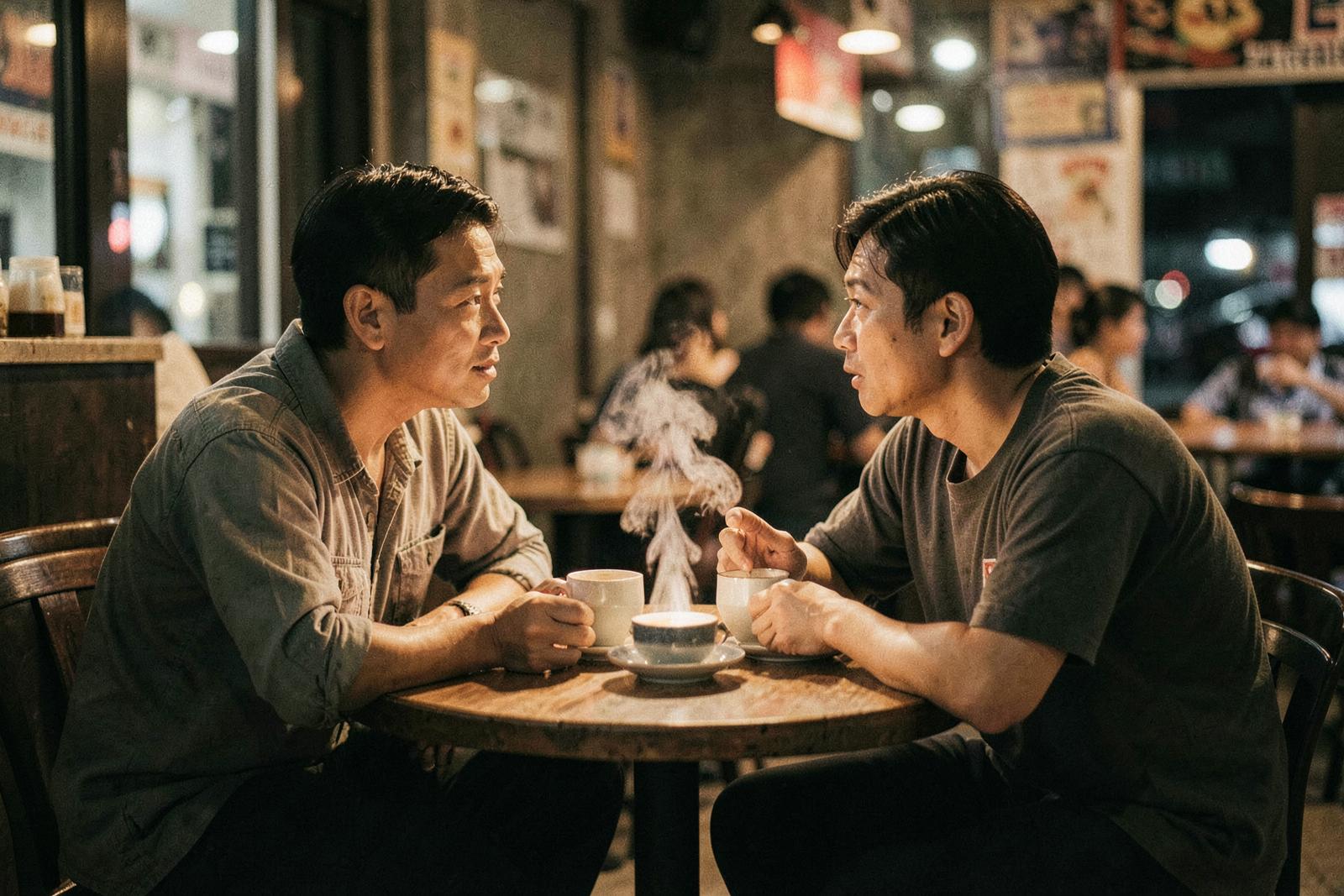
The first town had one café open before nine. The owner, in his sixties, did not ask where we were from. He did not recommend anything. He poured coffee, returned to his newspaper, and let us be a piece of furniture for an hour.
It was the most generous thing anyone had done for us in months.
In a culture trained to make every interaction a small performance — of warmth, of interest, of customer service — being treated as ordinary is a kind of luxury you cannot buy.
The second town: weather as a calendar
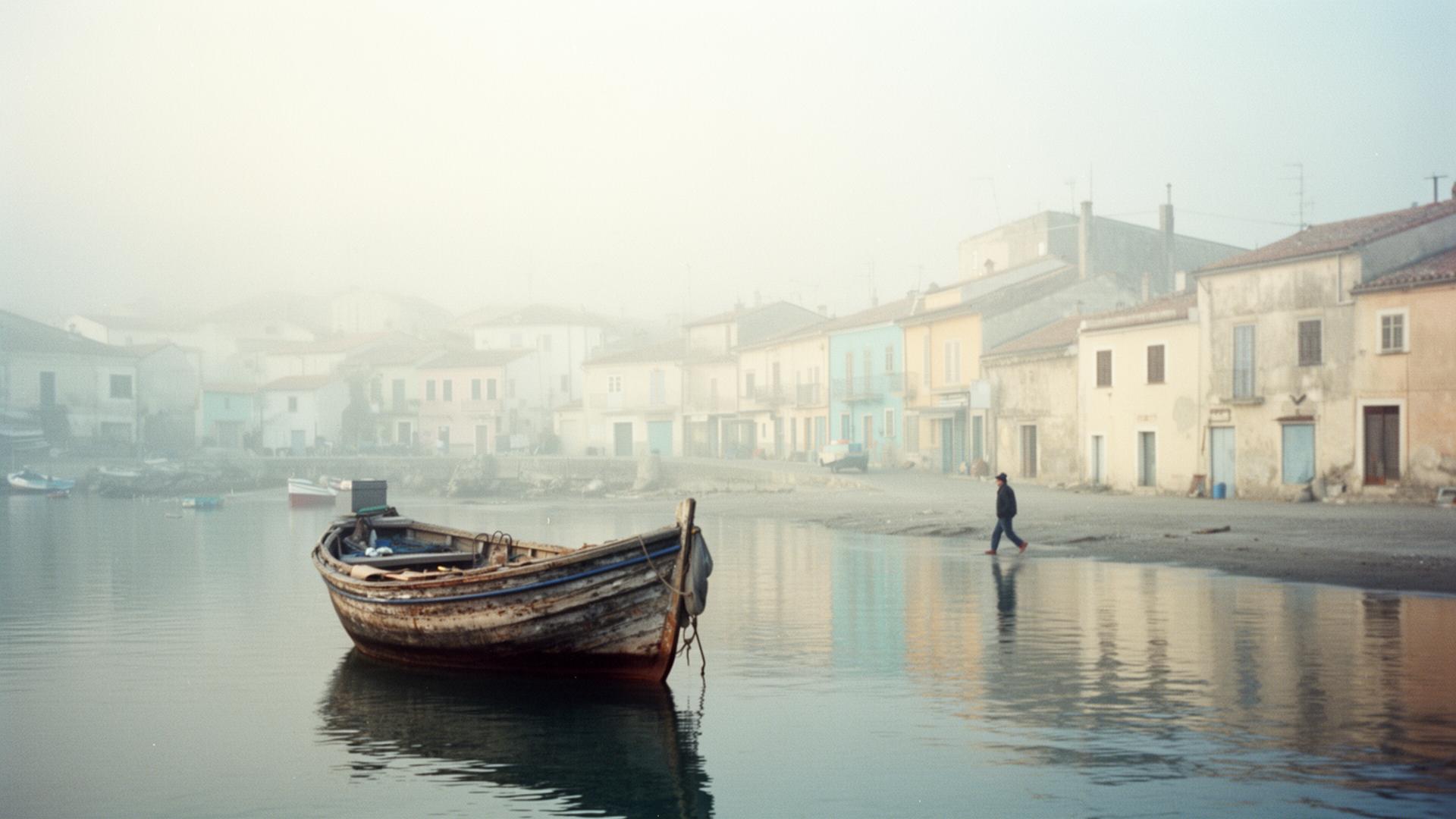
The second town did not run on hours. It ran on tides.
The boats came in when they came in. The market opened when the boats came in. Lunch happened after the market. The afternoon was for sleeping, mending nets, sitting on a low wall and watching the same horizon you watched yesterday.
Nothing about this is romantic if you live there. It is just the shape of life. But for a visitor whose week is normally a stack of fifteen-minute blocks, it is a quiet rearrangement of the nervous system.
You stop checking the time. Then you stop reaching for your phone. Then, eventually, you stop thinking in tasks.
That last one takes about three days.
The third town: the dignity of not being interesting
The third town had no view, no famous dish, no festival, no monument worth a detour. It had a square, three bars, a church, a bakery, and a very old man who walked his very old dog at exactly 7:14 every morning.
It was the best of the three.
There is a particular dignity in a place that has not been told it should be interesting. It does not curate itself for you. It does not apologise for not being more. It is simply, quietly, itself.
The most healing places on earth are usually the ones least interested in being discovered.
What the slow places teach
You come back from a town like this and people ask what you did. The honest answer — walked, ate, slept, watched the sea, said almost nothing — sounds like a wasted trip.
It wasn't a trip. It was a re-tuning.
The slow places do not give you content. They give you back something more useful: the experience of an hour being an hour again, and the memory that you, underneath everything, are still a creature that responds to weather and light and the smell of bread at 6am.
That memory is harder to keep alive than it should be.
Which is exactly why we keep going back to the towns that don't perform.
Good ideas from Three coastal towns, off-season
- ·Arrive a day earlier than you think you need to. The nervous system does not land on the same plane the body does.
- ·Eat where the locals eat lunch, not dinner. Lunch is when a town stops performing for tourists.
- ·Walk the same loop three mornings in a row. The town only starts to speak to you on the third pass.
- ·Find the oldest café and order what the oldest person there is having. No translation app required.
- ·Leave one full day with nothing planned. That is the day the trip actually happens.